
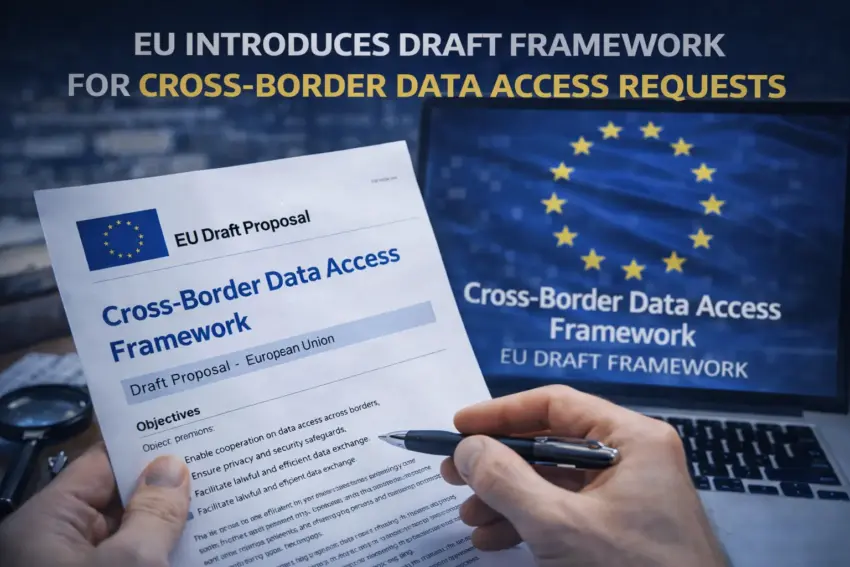
The European Union has introduced a draft framework aimed at streamlining cross-border data access requests, as policymakers try to reduce delays and legal uncertainty when authorities seek digital evidence or other data held in another Member State. The initiative is designed to create clearer procedures for requesting, reviewing, and responding to data requests—while strengthening safeguards for privacy, due process, and proportionality.
EU officials and industry observers say cross-border cases have become routine as cloud services, messaging platforms, and data centers operate across multiple jurisdictions. Investigators often need faster access to specific data to pursue serious crimes, but service providers and public bodies face complex, overlapping rules that can slow cooperation or lead to disputes about what is lawful to disclose.
What the draft framework is meant to address
The draft framework targets three recurring problems: inconsistent request formats between countries, unclear legal bases and approval routes, and practical bottlenecks when data is stored or controlled outside the requesting authority’s territory. In cross-border investigations, even small procedural differences—deadlines, notification duties, or the scope of permissible requests—can lead to long delays.
The EU approach aims to reduce friction by standardizing how requests are structured and how responses are processed, while keeping high-impact requests subject to stronger oversight and documentation.
Core elements under discussion
While details vary by policy area, the draft framework is generally described around a practical “request lifecycle” that can be applied across borders:
- Standard request templates with mandatory fields (legal basis, purpose, data scope, urgency, and retention period).
- Clear jurisdiction checks so providers and authorities can confirm which national rules apply.
- Defined response timelines that distinguish urgent cases from routine requests.
- Secure transmission channels to protect sensitive data and prevent interception or tampering.
- Documentation and audit trails so requests can be reviewed later by oversight bodies or courts.
- Safeguards for fundamental rights, including necessity and proportionality tests and limits on overly broad requests.
Policymakers are also weighing how the framework interacts with existing EU instruments on electronic evidence and cross-border cooperation, to avoid duplicating systems or creating conflicting obligations for service providers.
What it could mean for platforms and service providers
For companies that receive government requests—cloud providers, telecom operators, messaging services, and SaaS vendors—the framework could bring more predictable processes. A standardized format and clearer points of contact can reduce back-and-forth clarifications, shorten processing time, and lower the risk of accidental non-compliance.
At the same time, providers are likely to face stronger expectations on recordkeeping, response workflows, and internal escalation for sensitive requests. Smaller firms, in particular, may need new tooling to track request deadlines, validate legal references, and document how decisions were made.
“The promise is speed and clarity. The challenge is ensuring safeguards remain strong when processes are made faster.”
Privacy and civil liberties concerns
Digital rights groups and some legal experts argue that cross-border access frameworks must not dilute protections by making it easier to request large volumes of data or by weakening oversight. They emphasize that stricter rules should apply to intrusive categories such as content data, real-time interception, and large-scale metadata access. Transparency toward affected individuals, independent review mechanisms, and meaningful avenues for challenge are frequently cited as essential safeguards.
Another sensitive point is how the framework handles requests that involve multiple legal regimes—especially where data protection, criminal procedure, and platform obligations overlap. Critics warn that unclear boundaries could shift risk onto providers, forcing them to make difficult legal judgments under time pressure.
What happens next
The draft framework is expected to move through consultations and technical discussions, with policymakers focusing on interoperability with existing EU instruments, practical enforcement, and the design of safeguards. If adopted in a binding form, the framework could reshape how cross-border data access requests are handled—making processes faster and more consistent, while placing renewed emphasis on proportionality, traceability, and accountability.