
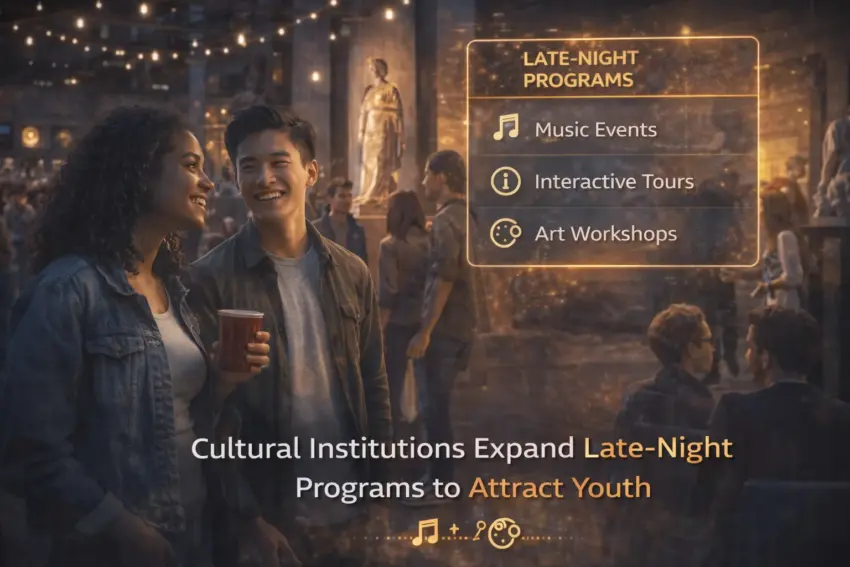
Cultural institutions across Germany are expanding late-night programs in an effort to attract younger audiences, testing formats that blend exhibitions with music, workshops, and social spaces. Museums, galleries, libraries, and theaters report that evening events can lower the barrier to entry for people who do not typically visit during standard opening hours and can position institutions as part of the city’s nightlife rather than a daytime destination.
Organizers say the strategy is not only about extending hours. Many late-night offers are built as curated experiences with a clear theme, short-form activities, and collaborations with local DJs, student groups, and creative communities. The approach reflects a broader shift toward participation and community building, especially in urban areas where younger residents have many competing entertainment options.
What late-night cultural programs look like
Late-night programming varies by institution and budget, but common elements are emerging across cities:
- Extended opening hours with reduced-price tickets or time-slot entry to manage crowding.
- Guided “short tours” designed for first-time visitors who want highlights in 20–30 minutes.
- Music and performance in galleries or courtyards, often with local artists.
- Hands-on workshops such as printmaking, photography, digital art, or creative writing.
- Talks in casual formats including Q&As, lightning lectures, and curator “ask me anything” sessions.
- Social spaces with cafés, pop-up bars, or lounge areas that encourage people to stay.
Some institutions are also experimenting with multilingual sessions and low-threshold “come as you are” messaging to reduce intimidation for newcomers.
Why youth audiences are a priority
Publicly funded cultural organizations face pressure to demonstrate broad social impact and long-term relevance. Attendance data in some venues shows strong engagement from older audiences, while institutions compete to build habits among students and early-career residents. Late-night formats target that gap by aligning with work schedules, university life, and social routines.
Institutions also see late-night events as a gateway: a visitor who attends for a music night may return later for a traditional exhibition or become a member. In that sense, the events function as both outreach and audience development.
Partnerships and programming strategy
Many late-night programs depend on partnerships. Institutions collaborate with universities, local collectives, independent venues, and cultural start-ups to keep programming fresh and connected to local scenes. Some have introduced rotating “guest curator” concepts, allowing young creatives to shape parts of an evening or select themes that resonate with their communities.
Digital promotion is also central. Events are often marketed through short videos, influencer collaborations, and campus channels rather than traditional posters or press listings.
“If we want new audiences, we have to meet them where they are—both in time and in tone.”
Challenges: staffing, safety, and mission drift
Extending hours can strain staffing budgets, especially for institutions already dealing with rising operating costs. Security and crowd management also become more complex at night, particularly when alcohol is involved or when events draw large groups. Some cultural workers warn that a strong focus on nightlife-style programming could blur an institution’s educational mission if not balanced with curatorial quality.
Organizers respond that the goal is not to turn museums into clubs, but to create a welcoming entry point that still respects collections and learning outcomes. Many institutions are therefore limiting loud programming to specific zones, setting clear behavioral rules, and maintaining quiet spaces for visitors who want a traditional experience.
What to watch next
In the next year, cultural institutions are expected to refine late-night models by focusing on repeatable formats, measuring audience conversion, and expanding accessibility features. Some cities are exploring coordinated “late-night culture” calendars across multiple venues to encourage visitors to move between institutions in one evening.
If the strategy proves sustainable, late-night programming could become a regular part of the cultural offer in German cities—supporting youth engagement while giving institutions a new role in urban social life.