
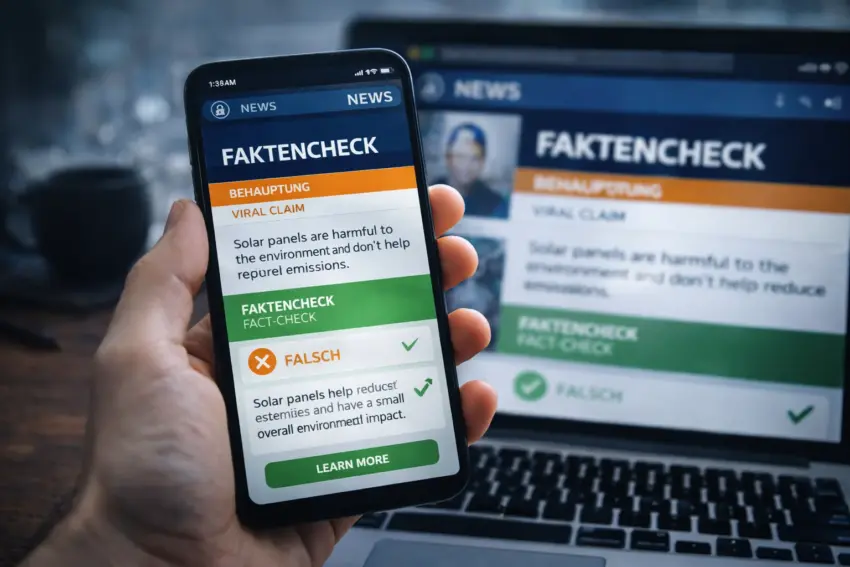
Public broadcasters across Europe are reshaping how they publish fact-checks, introducing mobile-first formats designed for fast scrolling, short attention spans, and platform-native video. The goal is to make verification easier to find and easier to understand at the exact moment misinformation is spreading—often on phones.
The new approach typically combines short vertical videos, concise “claim vs. evidence” cards, and live verification feeds that update throughout the day. Editors say the shift responds to a clear reality: audiences—especially younger viewers—consume most news on mobile, often through social platforms rather than traditional homepages.
What the new format looks like
While each broadcaster is building its own style, several elements appear repeatedly:
- Vertical video explainers (30–90 seconds) summarizing a viral claim and the verified context.
- Swipeable fact cards with a clear verdict, key evidence, and links to sources.
- “Verify Live” timelines showing what journalists are checking in real time as events unfold.
- Visual evidence packs (maps, satellite imagery, timelines, and metadata) optimized for small screens.
- Source transparency labels outlining what is known, what is uncertain, and what is still being investigated.
Why public broadcasters are pushing mobile verification
Broadcasters describe three main pressures behind the redesign. First, misinformation now spreads fastest in video clips and screenshots—formats that do not travel well with long, text-heavy corrections. Second, audiences increasingly expect immediacy: they want to see what is being verified in near real time, not hours later. Third, platforms reward short, clear storytelling, which can leave traditional fact-check articles buried.
Public broadcasters also argue they have a distinct mandate to support media literacy. Packaging verification in a format that works on the devices people actually use is framed as a public-service update, not just a product change.
How teams verify faster without sacrificing standards
Editors say speed does not mean lowering the bar. Instead, workflows are being reorganized around “publishable steps” that can be shared as soon as they are confirmed:
- Rapid triage: identifying which claims are spreading fastest and could cause harm.
- Open-source checks: geolocation, reverse image search, frame-by-frame video analysis, and metadata review.
- Primary-source confirmation: documents, official data, on-the-record statements, and direct expert consultation.
- Transparent updates: posting what has been verified so far, and clearly marking what remains unconfirmed.
“If people encounter the claim on their phone, the correction has to meet them there—clearly, quickly, and with proof they can check themselves.”
Potential risks and criticism
Media researchers and press freedom groups have long warned that fact-checking can be attacked as partisan, especially when it focuses heavily on political disputes. Mobile-first formats can amplify that risk because short videos may look definitive even when the underlying evidence is nuanced.
Broadcasters say they are addressing this by adding methodology notes, linking to documents, and avoiding single-source verdicts. Some are also experimenting with “how we know” overlays—brief on-screen explanations of the verification method used.
What comes next
Public broadcasters are expected to expand the mobile fact-check format into more languages, increase coverage of manipulated video and AI-generated content, and integrate verification into major live news moments. For audiences, the change could mean fewer long explainers and more frequent, bite-sized checks—delivered in the same feed where questionable claims often appear.
Whether the new formats rebuild trust will depend on consistency: publishing evidence, correcting fast, and showing the work behind the verdict—one swipe at a time.