
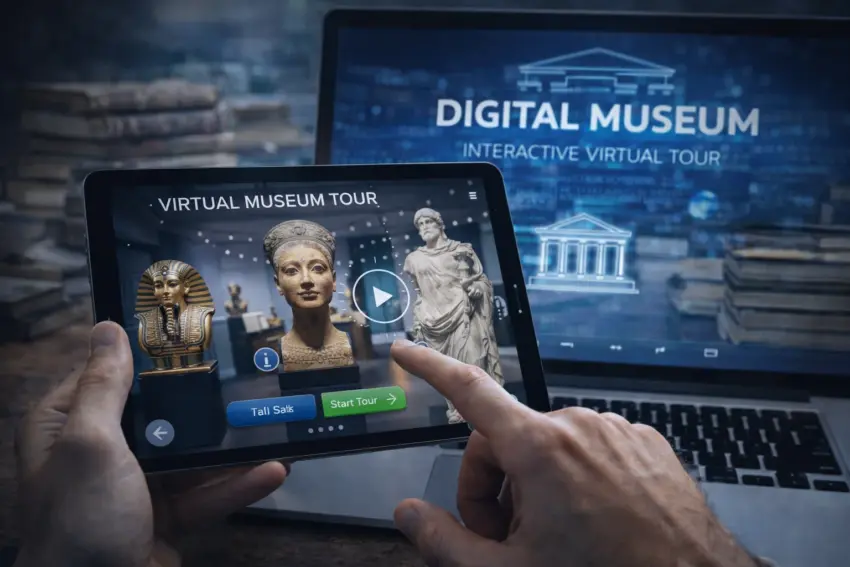
Museums across Germany and Europe are accelerating efforts to digitize their archives and launch interactive virtual tours, aiming to broaden access to collections that are rarely shown in galleries. The shift is driven by a mix of public demand, educational partnerships, and new technical capabilities that allow institutions to present artifacts in high resolution, add layered context, and create online experiences that feel more like a guided visit than a static image gallery.
Digitization teams are scanning documents, photographing objects, and building searchable databases that help researchers and the public explore collections by theme, time period, material, or location. At the same time, many museums are introducing virtual tours that combine 360-degree rooms, curated audio narration, and interactive “hotspots” that reveal stories behind key exhibits.
What “digitizing the archive” means
Most museum holdings never reach display cases because of space limits and conservation needs. Digitization expands visibility by converting physical items into digital records that can be accessed online. Depending on the collection, this can include:
- High-resolution photography of artworks, objects, and fragile materials.
- Document scanning for letters, catalogs, maps, and administrative records.
- 3D captures of sculptures, artifacts, and architectural elements.
- Metadata creation describing provenance, dates, materials, and contextual notes.
- Restoration documentation showing conservation steps and prior condition reports.
For museums, the work is both technical and curatorial: files must be accurate, searchable, and presented with enough context to avoid misinterpretation.
How interactive virtual tours are evolving
Early online tours often resembled simple photo walkthroughs. Newer formats are increasingly interactive and educational. Museums are adding features such as guided routes, quizzes for school groups, zoomable object views, and behind-the-scenes modules that explain how exhibitions are built.
Some tours also include accessibility-focused options, including subtitles, transcripts, audio description, and simplified navigation for users who struggle with complex interfaces.
“The virtual tour isn’t meant to replace the museum visit. It’s meant to open the doors for people who can’t get there—and to deepen the experience for those who can.”
Benefits for education and research
Schools and universities are among the biggest users of digitized archives. Teachers can build lessons around primary sources, while students can examine details that might be hard to see in person. Researchers benefit from searchable catalogs, standardized metadata, and the ability to compare objects across institutions without traveling.
Digitization can also support conservation by reducing physical handling of fragile items. In some cases, 3D models and detailed scans help conservators monitor changes over time and document restoration work.
Challenges: costs, rights, and representation
Building high-quality digital collections is expensive and time-consuming. Museums must invest in equipment, storage, staff training, and long-term maintenance. Another major challenge is rights management: not every work can be displayed online, and institutions must navigate copyright restrictions, licensing terms, and donor agreements.
Curators also face questions about representation and context. Digitized records can circulate widely, so museums increasingly add interpretive notes, provenance details, and cultural background to reduce the risk of objects being misunderstood or stripped of meaning when shared outside the museum’s own platforms.
What to expect next
Museums are expected to expand interactive formats further, including multilingual tours, more 3D objects, and digital exhibits built specifically for online audiences rather than adapted from physical galleries. Some institutions are also testing augmented reality features that connect on-site visits with the digital archive, allowing visitors to scan an exhibit label and immediately access deeper context, related works, and conservation histories.
For the public, the digitization push means more access to cultural heritage from any device—while also underscoring a broader shift: museums increasingly see their mission as both physical and digital, with archives that can be explored far beyond their walls.