
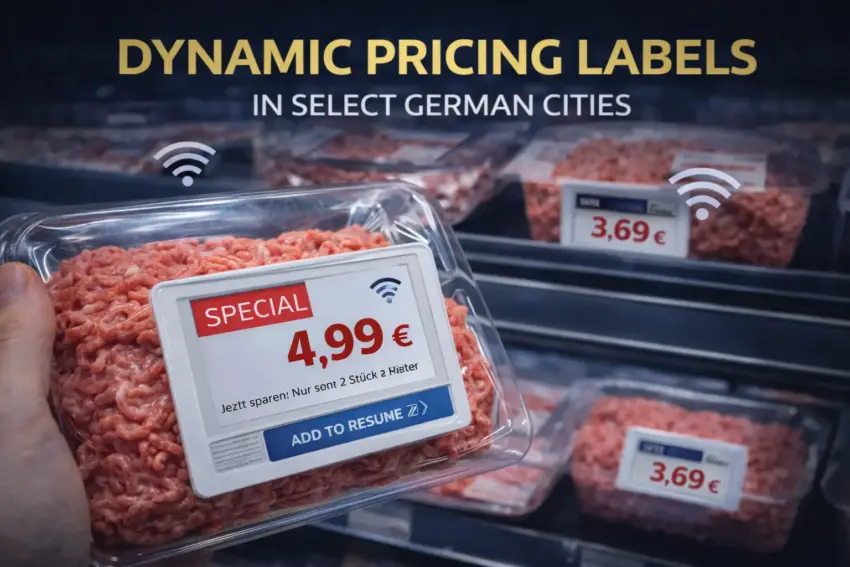
Retailers in Germany are testing dynamic pricing labels in a handful of cities, replacing static shelf tags with digital displays that can update prices in real time. The pilots are intended to help stores react faster to stock levels, short-term demand changes, and time-sensitive discounts—while also reducing the manual workload of printing and swapping paper labels.
The trials are drawing attention because “dynamic pricing” is already common online, but far more visible—and potentially controversial—when it appears on physical shelves. Consumer advocates and industry groups are watching closely to see whether the technology improves transparency and efficiency or creates confusion and distrust.
What dynamic pricing labels are
Dynamic pricing labels typically use electronic shelf labels (ESLs): small e-ink or LCD tags connected to a central pricing system. Instead of a staff member changing a paper tag, the store can push an update to hundreds or thousands of labels at once. The display usually includes the product name, price, unit price, and sometimes a QR code linking to product details.
In the pilot phase, retailers say they are mainly using the feature for scheduled promotions, near-expiry markdowns, and rapid corrections when pricing errors are detected—not for constant minute-by-minute shifts.
Why retailers are testing it now
Retailers cite several reasons for experimenting with dynamic labels:
- Faster promotions by activating discounts instantly across a store or region.
- Better waste reduction through targeted markdowns for short-dated items.
- Fewer pricing errors by synchronizing shelf prices with checkout systems.
- Lower labor costs by reducing manual label changes.
- More flexibility during supply disruptions or sudden demand spikes.
For retailers operating on thin margins, even small efficiency gains can matter—especially when staffing is tight and energy and logistics costs remain unpredictable.
What shoppers may notice in stores
In stores running pilots, customers may see digital tags on selected aisles rather than the full shop floor. Some displays highlight the time window of a discount or show a “last updated” marker to reinforce transparency. Retailers are also testing clearer unit pricing and larger fonts to make comparisons easier at a glance.
“The technology can reduce mistakes, but customers need to feel confident that prices are fair and predictable while they shop.”
Concerns: fairness, transparency, and trust
Dynamic pricing in physical stores raises questions that do not exist in the same way online. Consumer groups warn that frequent price changes could make it harder to compare products and could penalize shoppers who arrive later in the day. There are also concerns about whether stores might raise prices during peak hours or local events, even if the underlying costs have not changed.
Retailers involved in the pilots emphasize that any broader rollout would need clear rules: price changes should be predictable, documented, and communicated in a way that allows customers to understand what is happening and why.
Legal and operational questions
In Germany, pricing must remain clearly displayed and consistent between the shelf and the checkout. That means retailers have to ensure system reliability: if a price changes, the update must synchronize across shelf label, app, and point-of-sale systems without gaps. Stores also need internal controls so staff can audit changes, handle disputes, and correct errors quickly.
Industry observers say the most sensitive point will be governance—who can trigger a change, what limits exist, and how stores prove what price was shown at a specific time if a customer challenges it.
What happens next
The pilot results will likely determine whether retailers expand dynamic labels beyond promotions and waste reduction into broader price management. If shoppers respond positively, the technology could spread quickly, especially in categories where demand fluctuates and stock is time-sensitive. If the tests generate backlash, retailers may keep digital labels primarily as a back-office efficiency tool while limiting how often prices change in front of customers.
For now, the trials represent an early attempt to bring online-style pricing flexibility into physical stores—while navigating the higher expectations for clarity and fairness that come with in-person shopping.