
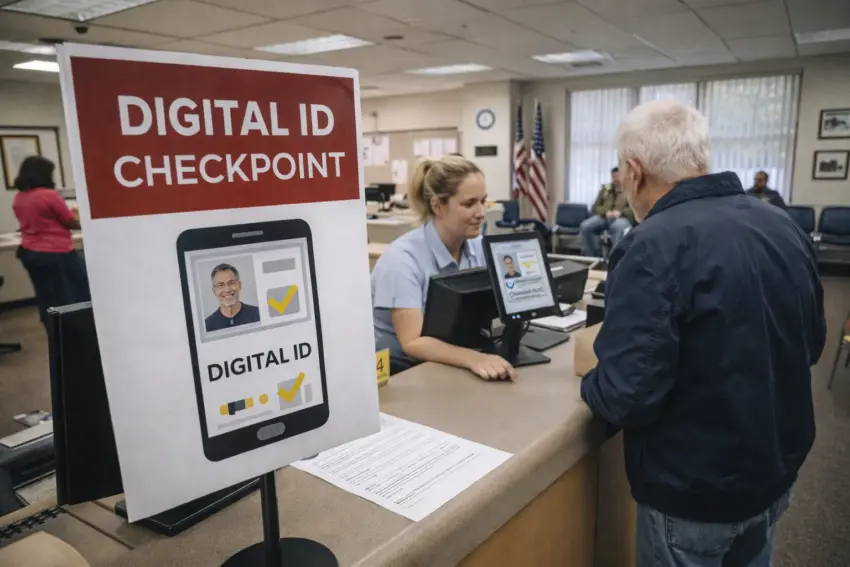
Local governments are piloting digital ID checkpoints for access to public services, aiming to streamline identity verification for residents while reducing paperwork and in-person processing queues. The pilots typically allow citizens to confirm identity through a secure digital credential—often linked to an existing national or regional eID system—when applying for services such as permits, benefits, registrations, or appointment-based consultations.
What “digital ID checkpoints” are
A digital ID checkpoint is a verification step that confirms a person’s identity before they can complete a public-service transaction. Instead of presenting documents at a counter, residents authenticate through a digital identity method—such as an eID app, a secure login portal, or a QR-based verification flow at a service location. The goal is to reduce fraud and speed up service delivery while keeping access inclusive for people who still rely on offline options.
- Online authentication for services that previously required in-person ID checks.
- QR or kiosk verification at municipal offices to speed up check-in and routing.
- Secure credential use linked to verified government-issued identity.
- Reduced document handling by limiting repeated photocopies and manual checks.
- Audit trails that help track access and prevent impersonation.
Why municipalities are testing them now
Public administrations across Europe face competing pressures: citizens expect faster online service, budgets are tight, and fraud prevention requirements are rising. Digital ID checkpoints are presented as a way to deliver more transactions online and reduce bottlenecks at offices—especially for services that spike seasonally, such as registrations, housing-related documents, or benefit renewals.
Another driver is interoperability. As national eID frameworks mature and cross-border digital identity standards expand, local governments can build on existing infrastructure rather than creating separate login systems for each municipality.
What changes for residents
In pilot areas, residents may notice that more processes move from “appointment required” to “digital-first,” especially for routine services. Some municipalities are also introducing faster in-office check-in: residents verify identity at a digital checkpoint and are directed to the correct counter without repeated document checks.
- Fewer in-person visits for identity verification steps.
- Faster office check-in via QR or kiosk-based authentication.
- Single sign-on experience across multiple municipal services.
- Clearer status tracking for applications and document requests.
Security and privacy concerns
Digital ID checkpoints raise questions about data minimisation, logging, and potential surveillance. Public bodies must ensure that verification does not turn into unnecessary data collection, and that logs are retained only as long as necessary. In Germany and the EU, acceptance often hinges on transparency: what data is used, who can access it, and whether residents have meaningful alternatives.
Another risk is exclusion. Not everyone has a modern smartphone or feels comfortable using digital identity tools. Most pilots therefore keep a parallel offline process—at least during early stages—to ensure access remains universal.
How pilots are being evaluated
Municipalities typically measure outcomes such as processing time, fraud reduction, customer satisfaction, and the number of services that can be completed fully online. They also track operational impacts: whether staff workloads shift from counter work to case processing, and whether call-center volume declines as residents can check status digitally.
- Queue reduction at public offices and improved appointment availability.
- Completion rates for online service transactions.
- Error and fraud indicators compared with manual verification.
- User satisfaction and accessibility feedback.
- System reliability including downtime and support needs.
What to watch next
Expansion will depend on trust and interoperability: whether digital ID checkpoints work smoothly across different services and whether residents view them as a convenience rather than a barrier. Policymakers and city IT teams will also watch how checkpoints connect with broader European digital identity initiatives, including cross-border recognition and common standards for credentials.
Bottom line
Digital ID checkpoints in public services are intended to reduce bureaucracy and speed up verification, but their success depends on careful design: strong security, minimal data collection, clear communication, and inclusive offline alternatives. If pilots demonstrate real efficiency gains without undermining trust, they could become a standard part of how residents access municipal services.